From Sales Recording to a Complete Operational Cycle: El-Nafad with Edara
3 Reading minutes
On a busy opening day, the challenge is not only about selling products. It is also about whether the system can keep up with everything happening behind the scenes.
A customer buys an item, goods are issued, payment is collected, stock arrives in batches, and purchase operations need to be recorded accurately. With the wide variety of mobile accessories and their many details, relying on a system that only records sales is no longer enough to manage the business.
This is where the story of El-Nafad begins, a mobile accessories business that needed to move toward a system that connects sales, inventory, purchasing, import operations, and accounting within one operational cycle.
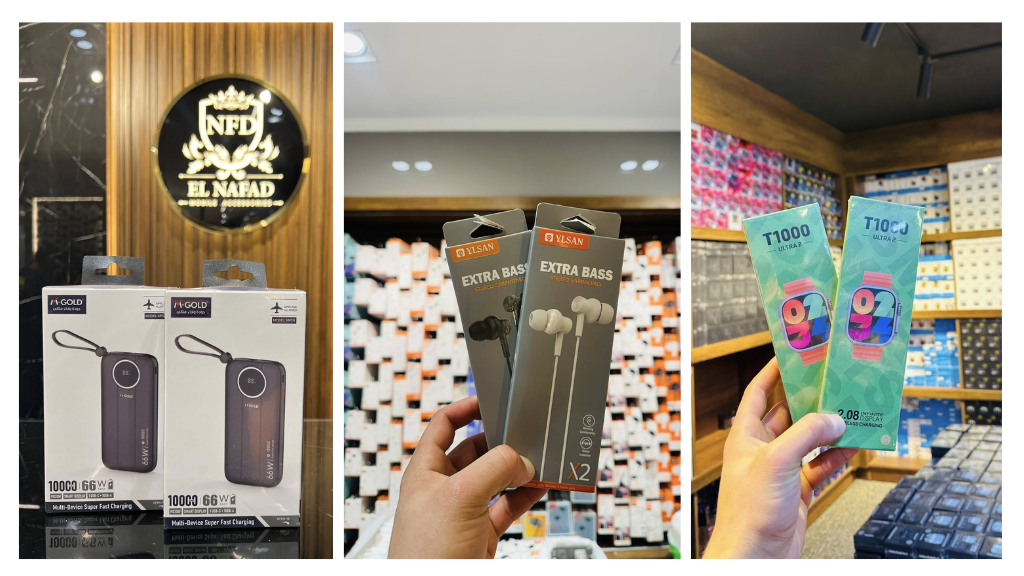
El-Nafad: A Fast-Moving Business with Many Details
El-Nafad operates in the mobile accessories market.
This type of business depends on a large number of items, with many differences in type, design, model, and device compatibility. That means the operational challenge goes beyond selling. It also includes item coding, inventory tracking, inventory transfers, purchasing, and knowing the true cost of each item.
As the business entered a larger operating phase, simply recording sales was no longer enough. What was needed was a clear operational cycle that connects sales invoices, inventory, purchasing, import operations, and accounting.
From a Desktop Program to a More Complete System
Before using Edara, the business relied on a simple desktop program that was closer to a POS-like sales recording tool than a complete system for managing operations.
This created clear gaps in accounting, inventory control, inventory transfers, invoicing, purchasing, and import costs. As operations grew, these gaps became more visible.
That is why the move to Edara was not just about replacing one program with another. It was about building a reliable system that organizes operations from the start, not just records what happens after the sale.
A Clear Sales Cycle from Sales Order to Goods Issue
With Edara, the sales cycle became more structured, starting with creating the Sales Order, then recording the Cash Receipt, and finally issuing the goods from inventory.
This sequence helped control the process instead of only recording the sale, with each step connected to the next inside the system.
In a fast-moving business like mobile accessories, this structure becomes especially valuable during busy hours, when the team needs to complete daily transactions quickly without losing data accuracy.
Clearer Purchasing, Import Operations, and Accounting
Import costs were one of the key areas El-Nafad needed to organize, as the previous program did not support this part properly.
With Edara, purchase operations could be recorded in more detail, with the ability to separate invoicing from receiving and manage partial receipts when goods arrive in batches.
The ability to work with multiple currencies also helped make purchasing and import operations clearer, while allowing costs such as shipping, customs, and other additional expenses to be handled more accurately.
As a result, item cost was no longer based on rough estimates. It became the outcome of recorded data within a more organized purchasing and receiving cycle.
The improvement also extended to accounting. Through Edara, it became easier to follow customer and supplier accounts, review the Trial Balance, access accounting reports, and view the Income Statement and Balance Sheet.
Fast Implementation During the Opening Phase
The system was not implemented in quiet conditions. It was introduced during the opening phase, a period that usually places heavy pressure on the team.
Despite that pressure, Edara was implemented within a short period, and the team started using it after a brief implementation phase.
In situations like this, system capability alone is not enough. The system also needs to be clear and easy to use, so the team can complete daily operations quickly, especially during opening days and peak traffic.
Conclusion: Better Operations Start with a Clear System
The experience of El-Nafad shows that managing a mobile accessories business is not only about recording sales. It requires a connected operational cycle that brings together sales, inventory, purchasing, import operations, and accounting.
With more organized in-store operations, better handling of import costs, and clearer financial reports, the business became better prepared to manage its workload from the start.
When all these details are managed in one place, starting operations becomes more organized, not an added burden on management.
Related articles

Managing Online Stores Across Multiple Markets: Adrian with Edara
When a customer places an order online, the challenge is not only about recording that order. Behind the scenes, stock needs to be updated, the required quantity must be reserved,…
From Quotation to E-Invoice: How “MyMap” Uses “Edara” to Manage Hotel Supply Orders
A new request comes in from a hotel for computers and accessories. Before the order reaches the invoicing stage, the team must confirm the required items and quantities, prepare a…

When the System Becomes a Partner: How “Edara” Supported Winner Brands’s Expansion
When "Winner Brands" opened its first store in El-Sakakawy Mall in 1998, it was just the beginning. Today, the company operates seven branches across Egypt’s busiest commercial hubs. As the…