From Desktop Software to Cloud ERP: How “El Dabbah Store” Connected Its Branches with Shopify Using “Edara”
3 Reading minutes
The challenge does not appear when each branch completes a sale. It appears when management needs to see what is happening across all branches and the online store in one clear picture.
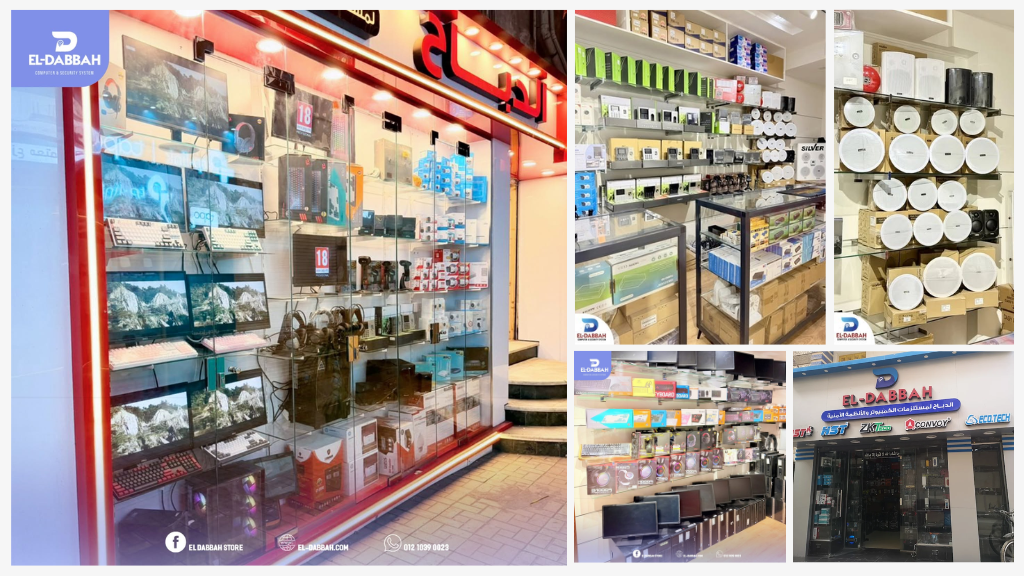
“El Dabbah Store“ deals with a wide range of technical products, from computers and accessories to surveillance cameras, POS systems, and networking products. In this type of business, model, specification, price, and availability are all part of the sales decision.
With this level of variety, the important questions become clearer: does the team see the same stock data across channels? Can they know where an item is available before losing a sale? And do online orders enter the same workflow used by the branches?
This is where the experience of “El Dabbah Store” with “Edara” began, as the company moved from desktop software to a cloud ERP system that connects branches, warehouses, sales, and Shopify in one operating flow.
When Desktop Software Became Too Limited for the Business
Using desktop software made sense at an earlier stage, when the business was closer to one location and one team.
But as the company expanded across branches and added an online store, the need for a more flexible system became clear. Desktop software remains tied to a specific place or device, while a multi-channel business needs unified data that can be accessed and followed from more than one point.
The challenge was no longer just recording sales. It was about building one clear view of daily activity: what was sold, which branch sold it, what is available now, and which orders came from the website.
Moving to “Edara” helped “El Dabbah Store” shift from software that served a limited operating scope to a cloud ERP system that connects branches, the online store, and inventory in one source of data.
“Edara”: A Cloud ERP System for Connected Branches
With “Edara”, “El Dabbah Store” can follow its branches through one system, instead of treating each branch as a separate unit with its own isolated data.
This connection helps the team track product movement between branches, view stock balances more clearly, and reduce the need for manual follow-up or repeated communication just to know where an item is available.
For a business that sells technical products, this visibility matters even more. A different model or specification can determine whether an order is ready to be fulfilled immediately or needs follow-up from another branch.
Shopify Integration
Selling through an online store does not end when the order is placed on the website. The more important step comes next: how does that order enter the sales and inventory workflow used by the team every day?
By connecting Shopify with “Edara”, website orders became part of the company’s workflow inside the system, instead of remaining a separate channel that required separate entry and follow-up.
This helped reduce the gap between what customers order online and what the team follows across the branches. Online orders became connected to item and inventory data and could be handled as part of the daily sales movement.
As a result, the online store was no longer just a separate sales front. It became a connected channel within the same system that manages branches and inventory.
A Clearer View of Sales Across Branches and the Online Store
When branches and Shopify are connected in one system, sales are no longer scattered across different places.
Management can follow movement across branches and the website more clearly, understand sales trends, check product availability, and track orders from one source.
As the sales cycle is completed inside “Edara”, the team can also review order cost, expected profit, and the accounting impact of operations without turning the financial side into a separate track away from daily operations.
This makes daily data more useful for management. It does not only show what happened; it helps explain it within its operational and financial context.

From Location-Based Operations to a Connected Business
The experience of “El Dabbah Store” shows that moving from desktop software to a cloud ERP system is not only about changing tools. It is about changing the way the business is seen and managed.
With “Edara”, branches, Shopify, warehouses, and sales became connected parts of one workflow, instead of separate channels working with separate data.
For a business built around technical products, multiple models, and different sales channels, the value of the system lies in bringing all moving details into one clear picture, from item availability at the branch, to the website order, to tracking the sale and its results.
Related articles

How “Mofkera” Manages a Large Product Range Across Branches with “Edara”
Two products may have almost the same name, but one image can show a different color, pattern, or design. For a retailer selling gifts, stationery, and school supplies, these visual…

Technology Valley x Edara: A Growth Journey Powered by a System That Scales
"Technology Valley"’s growth over the past decade wasn’t just about opening new branches—it was a continuous test of whether their system could keep pace with a business that was expanding…

Edara’s Role in Elghazawy Company’s Success
Elghazawy Company, a retail pioneer founded in 1950 in Egypt, had grown into a successful business with branches across Zagazig. The company faced a myriad of challenges, including adapting to…